
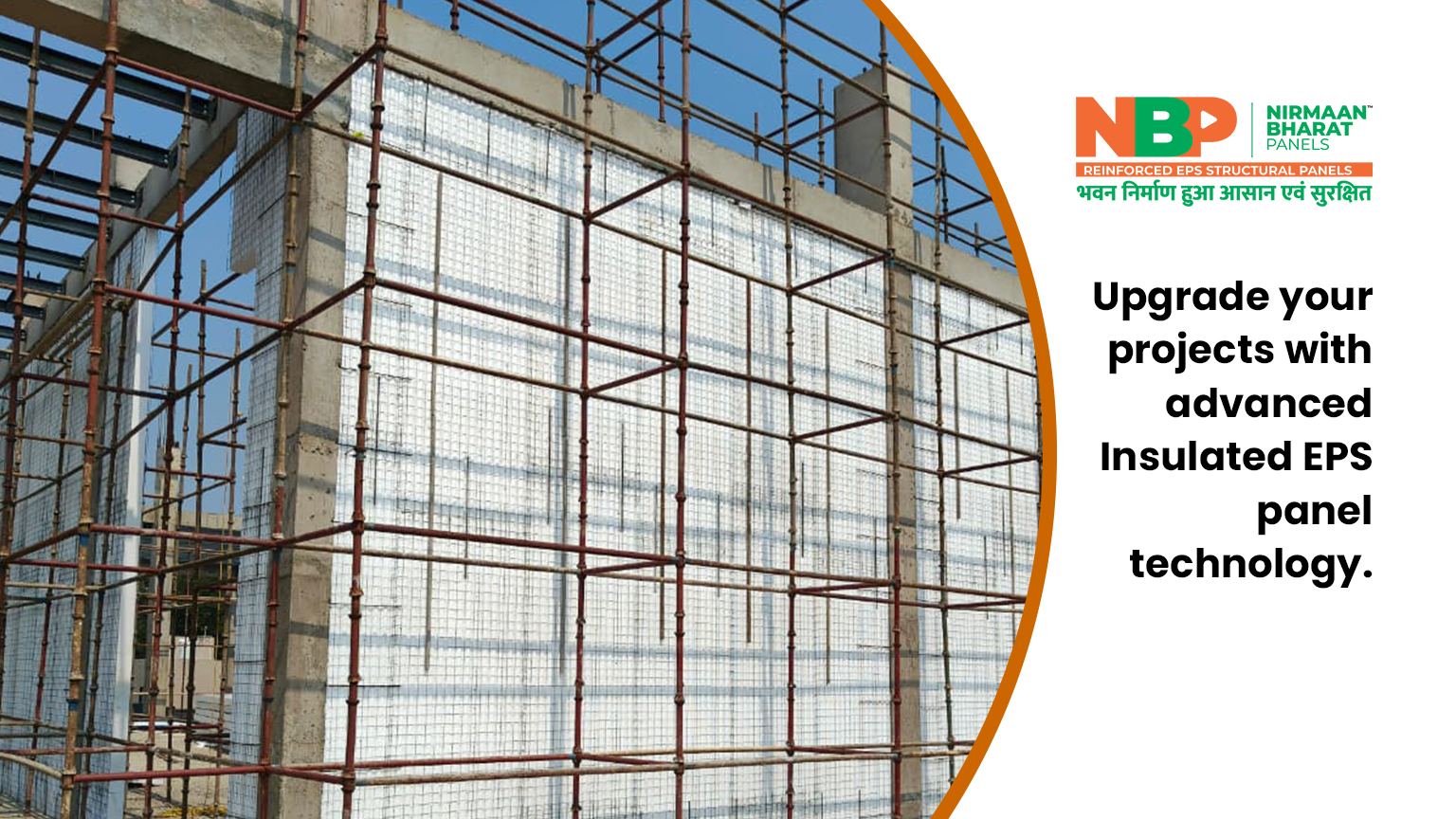
Construction is changing rapidly. Today, architects, builders, contractors and project owners are looking for building systems that can combine construction efficiency, thermal performance, design flexibility and dependable site execution.
This is where EPS panels are becoming an important solution for modern construction.
An EPS panel system uses an expanded polystyrene (EPS) core integrated with steel reinforcement and a cement-based protective layer to create a finished wall or structural building element. Unlike conventional loose insulation materials, an engineered EPS panel system is designed to become part of the building assembly.
For projects where speed, insulation and efficient construction are important, insulated EPS panels can provide an alternative approach to conventional wall construction.
Table of Contents
ToggleWhat Are EPS Panels?
EPS panels are engineered construction panels made using an EPS core with reinforcing steel mesh on both sides. Depending on the application and system design, the panels are finished with a cementitious layer such as shotcrete or concrete to create a durable building surface.
The EPS core contributes to the insulation characteristics of the system, while the reinforced outer layers provide the required surface and structural performance according to the project’s engineering design.
This makes EPS construction panels different from simply using an EPS sheet as insulation.
They are designed as a complete construction system.
EPS Panel System Typically Includes:
- EPS insulation core
- Reinforcing steel mesh
- Connection and anchoring elements
- Cementitious/shotcrete surface layers
- Final plaster or surface finish where required
- Integrated provisions for electrical and plumbing services
The exact panel configuration and reinforcement should always be selected according to the project design and engineering requirements.
Why Are Insulated EPS Panels Gaining Attention?
Modern construction is not only about building walls. A building envelope has to contribute to comfort, energy performance, construction efficiency and architectural possibilities.
An insulated EPS panel system addresses several of these requirements within one construction methodology.
1. Thermal Insulation
One of the major reasons for considering EPS panels is the insulating property of the EPS core.
The material helps reduce heat transfer through the wall assembly, which can contribute to a more comfortable indoor environment when the complete building envelope is properly designed.
This makes EPS insulated wall panels relevant for residential, commercial, institutional and industrial projects where thermal performance is an important consideration.
2. Efficient Construction
Traditional masonry construction can involve multiple stages including brickwork, curing, plastering and other finishing activities.
With a panel-based construction system, wall elements can be erected and prepared for subsequent finishing through a more organized installation sequence.
For contractors, this can help create a more systematic construction workflow and reduce dependency on several conventional wall-building stages.
The actual project duration depends on design, manpower, site conditions, structural integration and finishing requirements.
3. Integration With Modern Building Structures
An EPS panel system can be incorporated into projects involving RCC structures and MS frame structures, subject to appropriate engineering and connection details.
This allows architects and contractors to consider EPS panels for:
- Residential buildings
- Commercial projects
- Industrial buildings
- Institutional structures
- Offices
- Warehouses
- Resorts
- Villas
- Interior and exterior partitions
- Building extensions
The panel system can be planned around the structural framework rather than treating the wall as an isolated component.
EPS Panels Are More Than “Thermocol Panels”
A common search term used by customers is thermocol panels. However, it is important to understand the difference between an ordinary thermocol/EPS sheet and an engineered EPS construction panel.
An EPS construction system combines the insulation core with reinforcement and cementitious layers to form a complete building element.
So when searching for an EPS panel manufacturer, customers should not compare only the EPS material. They should also consider:
- Panel composition
- Reinforcement system
- Connection details
- Surface treatment
- Installation methodology
- Engineering support
- Application suitability
- Quality control
- Project requirements
In other words, EPS panels for construction are a system, not simply a sheet of insulation material.
EPS Wall Panels for Flexible Architectural Design
Modern architecture increasingly uses curves, projections, contemporary elevations and customized forms.
One advantage of a panel-based construction approach is the ability to develop different architectural configurations according to the project’s design.
EPS wall panels can be considered for applications where designers want to create:
- Curved walls
- Feature walls
- Contemporary elevations
- Lightweight partitions
- Customized architectural forms
- Internal spaces
- External wall systems
This makes EPS-based construction relevant not only to conventional rectangular buildings but also to projects where architectural expression is an important part of the design.
Electrical and Plumbing Planning
Another important consideration in modern construction is the coordination of MEP services.
Electrical conduits, plumbing routes and other service requirements can be planned during the panel installation process, depending on the system and project methodology.
This can help reduce unnecessary wall chasing associated with some conventional construction methods.
Proper service coordination at the design and installation stage is essential to maintain the performance and integrity of the finished wall system.
Where Can EPS Construction Panels Be Used?
The versatility of EPS construction panels makes them suitable for exploring a wide range of applications.
Residential Construction
EPS panels can be considered for homes, villas, extensions and partition requirements where thermal performance and efficient construction are priorities.
Commercial Buildings
Offices, retail spaces, showrooms and other commercial developments can use insulated panel systems as part of their wall and partition strategy.
Industrial & Institutional Projects
Factories, warehouses, educational buildings and institutional developments may also consider EPS-based construction depending on structural and performance requirements.
Architectural Applications
EPS systems can also be used to develop customized shapes and contemporary architectural features when supported by the appropriate design and reinforcement methodology.
Choosing the Right EPS Panel Manufacturer
Selecting the right EPS panel manufacturer is an important part of any project.
Before placing an order, architects, contractors and developers should understand the complete product and installation system rather than evaluating the panel only by thickness or price.
Consider asking the manufacturer about:
Panel specifications
What is the EPS density, panel thickness and reinforcement configuration?
System design
How are panels connected to the RCC or structural framework?
Installation
What is the recommended installation procedure?
Surface finish
What cementitious or plaster finish is required?
Services
How are electrical and plumbing requirements incorporated?
Project support
Does the manufacturer provide technical guidance and site assistance?
A reliable EPS panel supplier should be able to clearly explain the system from manufacturing to installation.
NBP Nirmaan Bharat Panels – Reinforced EPS Structural Panel System
NBP Nirmaan Bharat Panels provides solutions based on Reinforced EPS Structural Panel technology, designed for modern construction requirements.
The system combines an EPS core with reinforced mesh and cementitious surface layers to create a construction element that can be incorporated into appropriately designed building projects.
From panel manufacturing to project requirements, the focus is on providing a coordinated solution for modern insulated construction.
For architects, builders and contractors exploring alternatives to conventional wall systems, EPS panels can be considered as part of a broader strategy for improving construction efficiency and building-envelope performance.
The Future of Construction Is Moving Toward Integrated Systems
The construction industry is gradually moving from individual materials toward integrated building systems.
Instead of treating insulation, reinforcement, wall construction and finishing as completely separate activities, modern construction technologies bring multiple functions together within a coordinated system.
That is the key idea behind Reinforced EPS Structural Panels.
For projects looking for a combination of insulation, reinforced construction, architectural flexibility and efficient installation, EPS panel technology offers another option to evaluate alongside conventional construction methods.
Looking for EPS Panels for Your Project?
Explore EPS panels, insulated EPS wall systems and Reinforced EPS Structural Panels by NBP Nirmaan Bharat Panels for your next residential, commercial, industrial or institutional project.
Build Faster. Build Smarter. with NBP Nirmaan Bharat Panels.