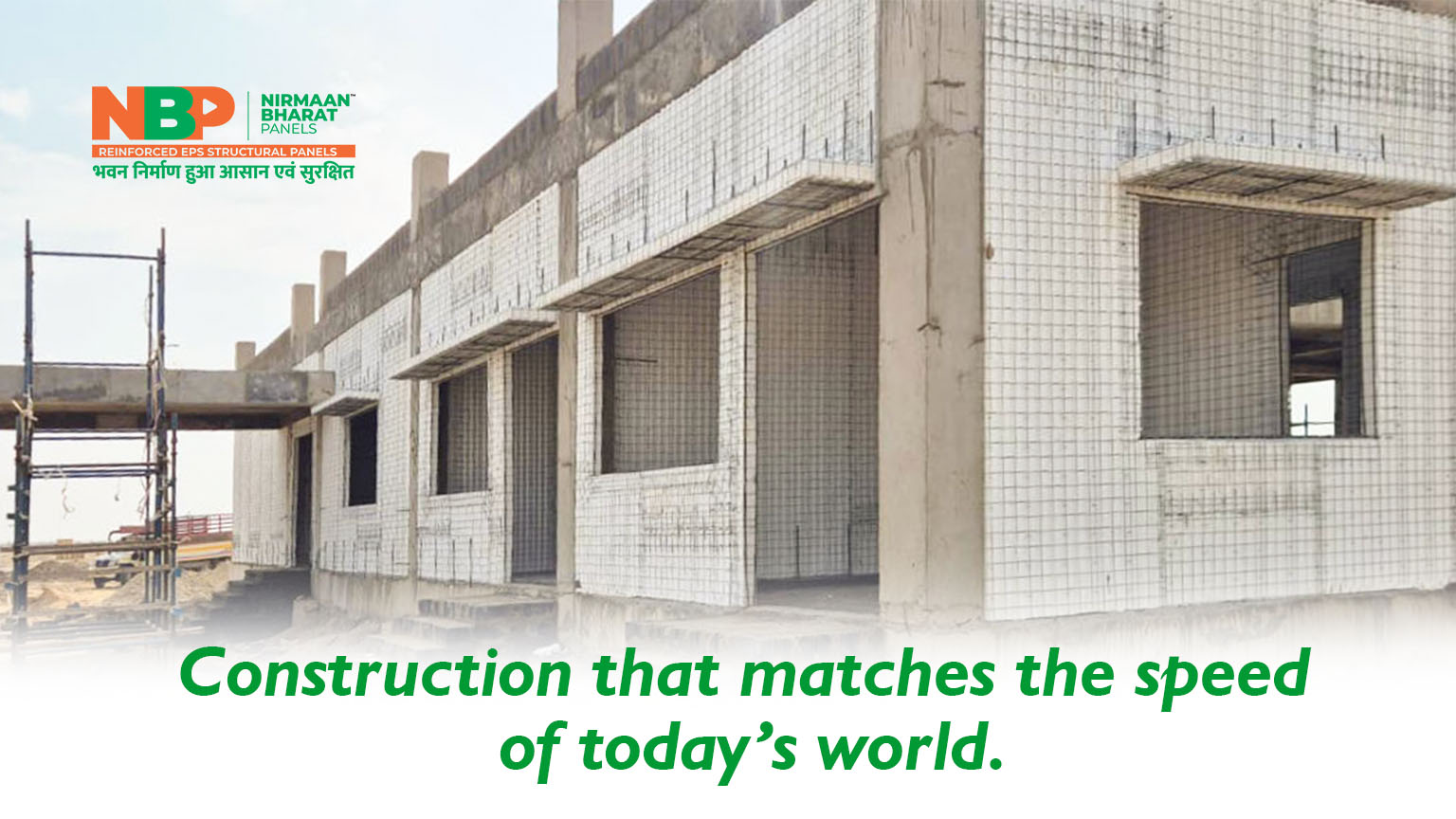
Construction is changing with the needs of today’s world. Builders now look for solutions that save time and improve building performance. EPS Panels Technology offers a modern approach to construction. It combines an insulating core, steel reinforcement, and cement-based layers in one building system.
At NBP Nirmaan Bharat Panels, we offer Reinforced EPS Structural Panel (RESP) Technology for modern construction. It is suitable for various residential and commercial applications, subject to structural design and project requirements.
Table of Contents
ToggleWhat Is EPS Panel Technology?
EPS stands for Expanded Polystyrene. It is a lightweight material that provides thermal insulation. In reinforced EPS panel systems, the EPS core sits between welded steel wire mesh layers.
The panels receive cement-based shotcrete or concrete layers as specified by the system design. This combination creates a reinforced building component for suitable construction applications.
It is important to understand that reinforced EPS panels are not simply thermocol sheets. They are engineered building components designed for use as part of a complete construction system.
Key Benefits of EPS Panels for Construction
1. Faster Construction
Time is important in every construction project. Traditional masonry often involves laying individual bricks or blocks. In comparison, EPS panel systems use prefabricated components.
As a result, installation can become more systematic. With proper planning and skilled labour, builders can improve construction efficiency and manage project timelines more effectively.
2. Strength and Stability
EPS panels combine steel reinforcement with cement-based layers. This system can provide the required structural performance when designed and installed correctly.
Moreover, proper reinforcement, connections, and finishing play an important role in the final result. Therefore, every project should follow its approved structural design and installation specifications.
3. Better Thermal Insulation
Indoor comfort matters in both homes and workplaces. The EPS core helps reduce heat transfer through building elements.
As a result, a properly designed building can maintain more comfortable indoor temperatures. It may also reduce heating and cooling requirements, depending on the climate and overall building design.
4. Lightweight Building Components
EPS panels are lightweight compared with many conventional solid masonry components. Therefore, handling and positioning can be easier during installation.
In addition, their prefabricated format can support a more organised construction process. Actual benefits depend on panel size, site conditions, and installation methods.
5. A Smarter Approach to Sustainable Construction
Modern construction focuses on efficient material use and better building performance. EPS panel technology can support these goals through planned installation and thermal insulation.
Furthermore, reduced site cutting and material waste may be possible with proper planning. The overall environmental impact depends on material production, transportation, construction practices, and building life-cycle performance.
Applications of EPS Panels in Modern Buildings
EPS panel technology can suit different projects when supported by appropriate engineering and design.
Residential construction: Builders can consider EPS panels for houses, villas, apartments, and housing developments.
Commercial construction: Offices, showrooms, retail spaces, and other commercial buildings may benefit from efficient construction methods.
Institutional buildings: Selected educational and institutional projects can explore EPS panel systems according to their design requirements.
Industrial projects: Suitable building elements and partitions can use EPS panels where the system meets the project’s specifications.
Additionally, electrical and plumbing services can be planned during installation. Following approved drawings helps maintain proper coordination and avoid unnecessary rework.
EPS Panels vs. Traditional Brick Construction
Traditional brick construction remains a popular choice. However, modern panel systems offer another approach to building.
Brick masonry usually requires individual units, mortar application, and finishing work. In contrast, EPS panel construction uses prefabricated components that require reinforcement connections and cement-based layers.
Therefore, the right choice depends on the project budget, structural requirements, labour availability, and construction schedule. Builders should compare both methods before making a decision.
Why Choose NBP Nirmaan Bharat Panels?
NBP Nirmaan Bharat Panels focuses on modern building solutions through Reinforced EPS Structural Panel Technology.
Our EPS panel system brings together thermal insulation, steel reinforcement, and cement-based finishing. It offers construction professionals another option for suitable residential and commercial projects.
With EPS panels, project teams can explore:
- Faster and more systematic installation.
- Thermal insulation for improved indoor comfort.
- Lightweight building components.
- Better coordination of electrical and plumbing services.
- Modern alternatives to conventional masonry methods.
However, every project requires proper planning. Panel selection, structural calculations, installation, and finishing should follow the applicable engineering specifications.
Build Faster. Build Smarter. Build for the Future.
Today’s construction industry needs solutions that balance speed, performance, and efficiency. EPS Panels Technology offers a modern building system for projects that require these qualities.
From residential developments to commercial spaces, reinforced EPS panels provide an alternative worth considering during the planning stage.
NBP Nirmaan Bharat Panels — Construction that matches the speed of today’s world.
Looking for EPS panels for your next project? Connect with our team to learn more about our panel system and its applications.
Contact NBP Nirmaan Bharat Panels
Phone: +91 99935 90572
Email: [email protected]